(Briggs, Calculus, Chapter 2.3)
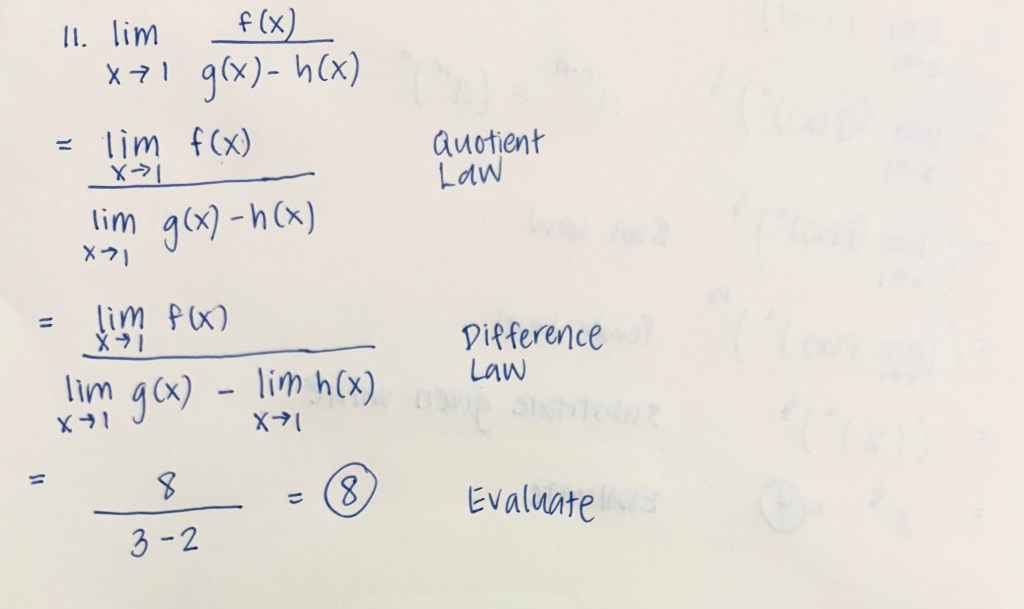
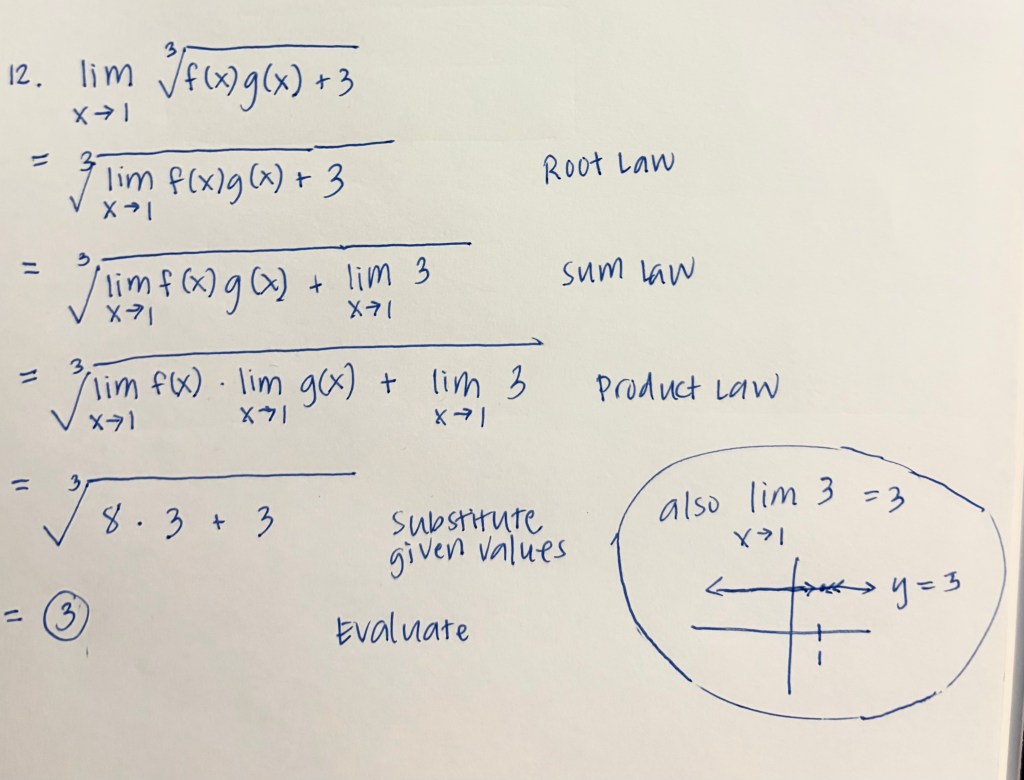
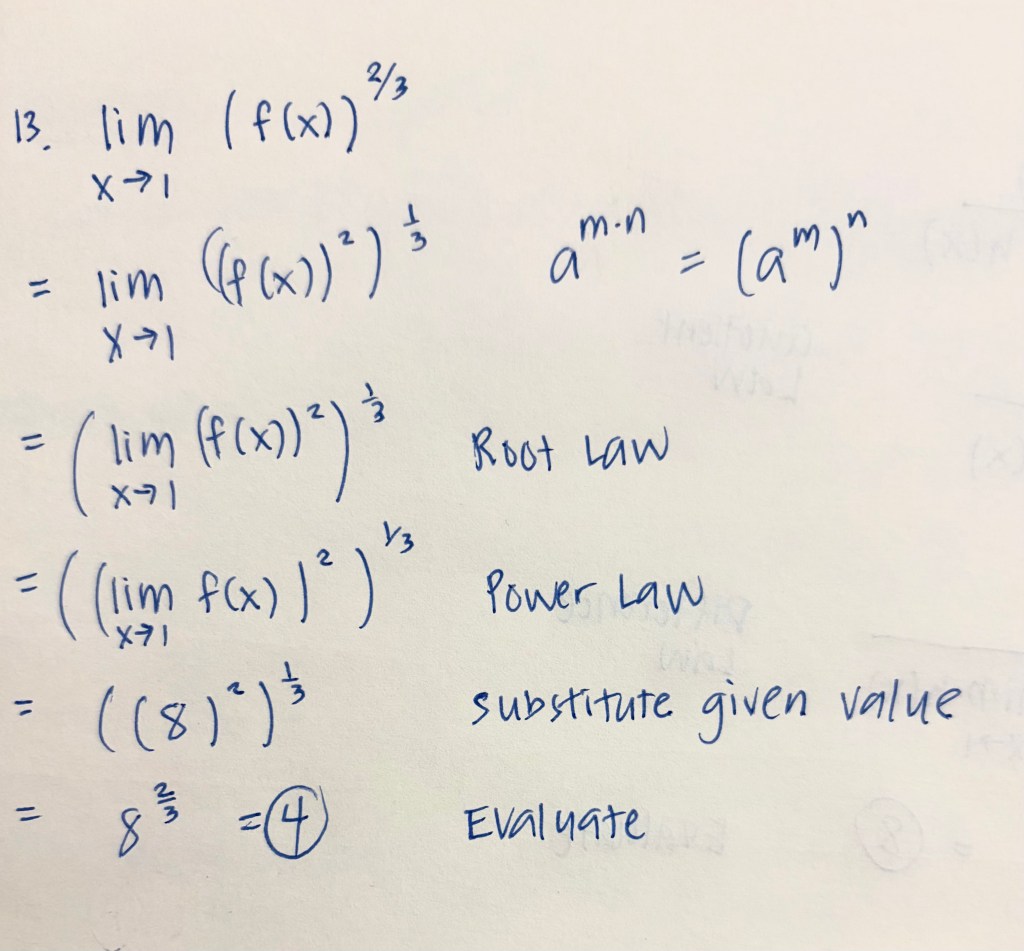
Assume as x -> 1, lim f(x) = 8, lim g(x) = 3, lim h(x) = 2. Compute the following limits and state the limit laws used to justify your computations.
11. lim f(x)/(g(x) – h(x))
12. lim (f(x)g(x) + 3)^(1/3)
13. lim (f(x))^(2/3)
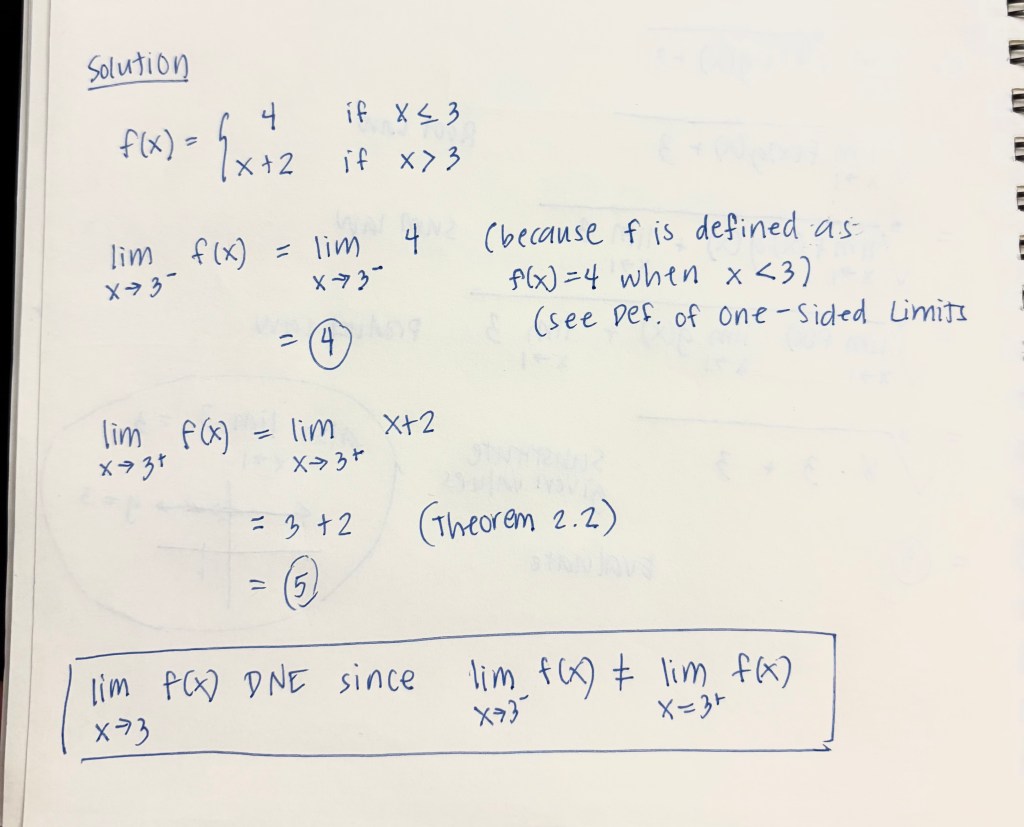
16. Suppose
f(x) = 4, if x ≤ 3
f(x) = x + 2, if x > 3
Compute lim(x→3⁻) f(x) and lim(x→3⁺) f(x). Then explain why lim(x→3) f(x) does not exist.
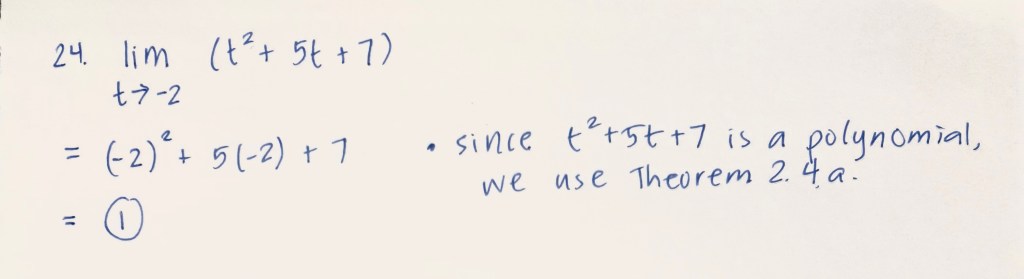
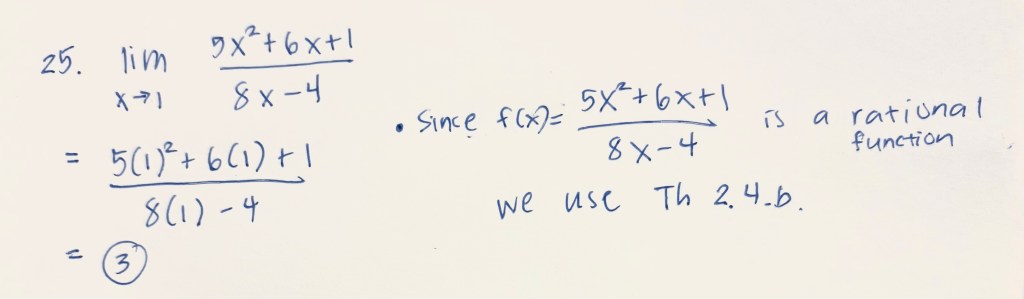
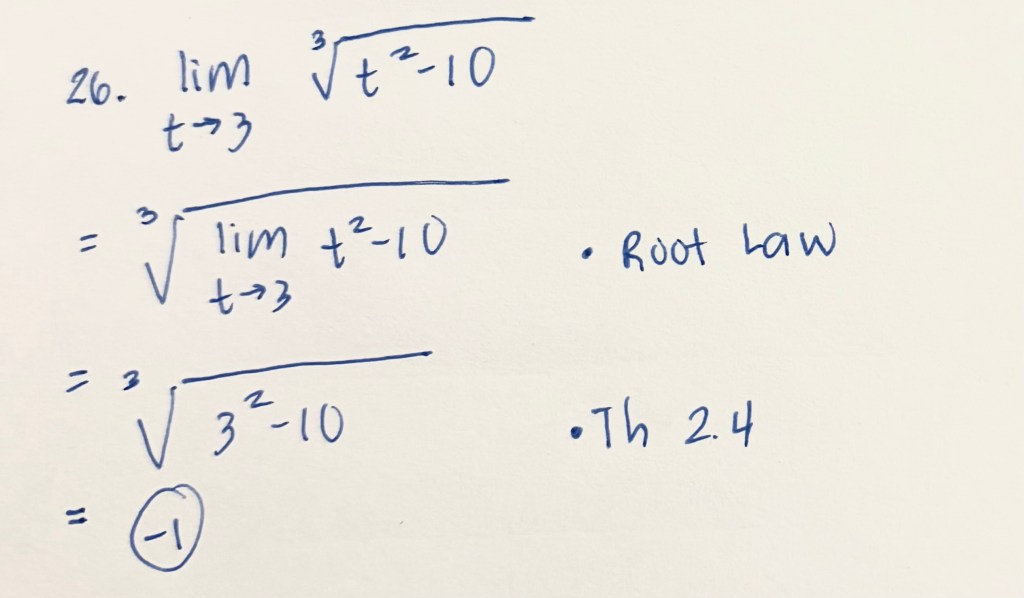
Use Theorem 2.4 to answer #s 24, 25, 26:
24. lim(t→−2) (t² + 5t + 7)
25. lim(x→1) (5x² + 6x + 1)/(8x − 4)
26. lim(t→3) ∛(t² − 10)
 Math with Mrs. Sarah
Leave a comment